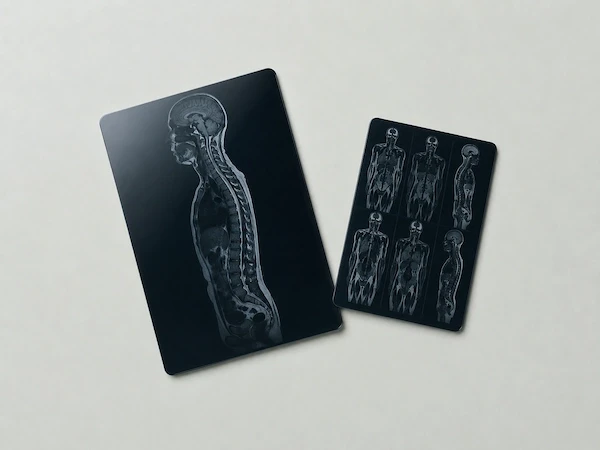
Full Body MRI

A broad, radiation-free survey of your body from head to thigh, all in a single sitting.
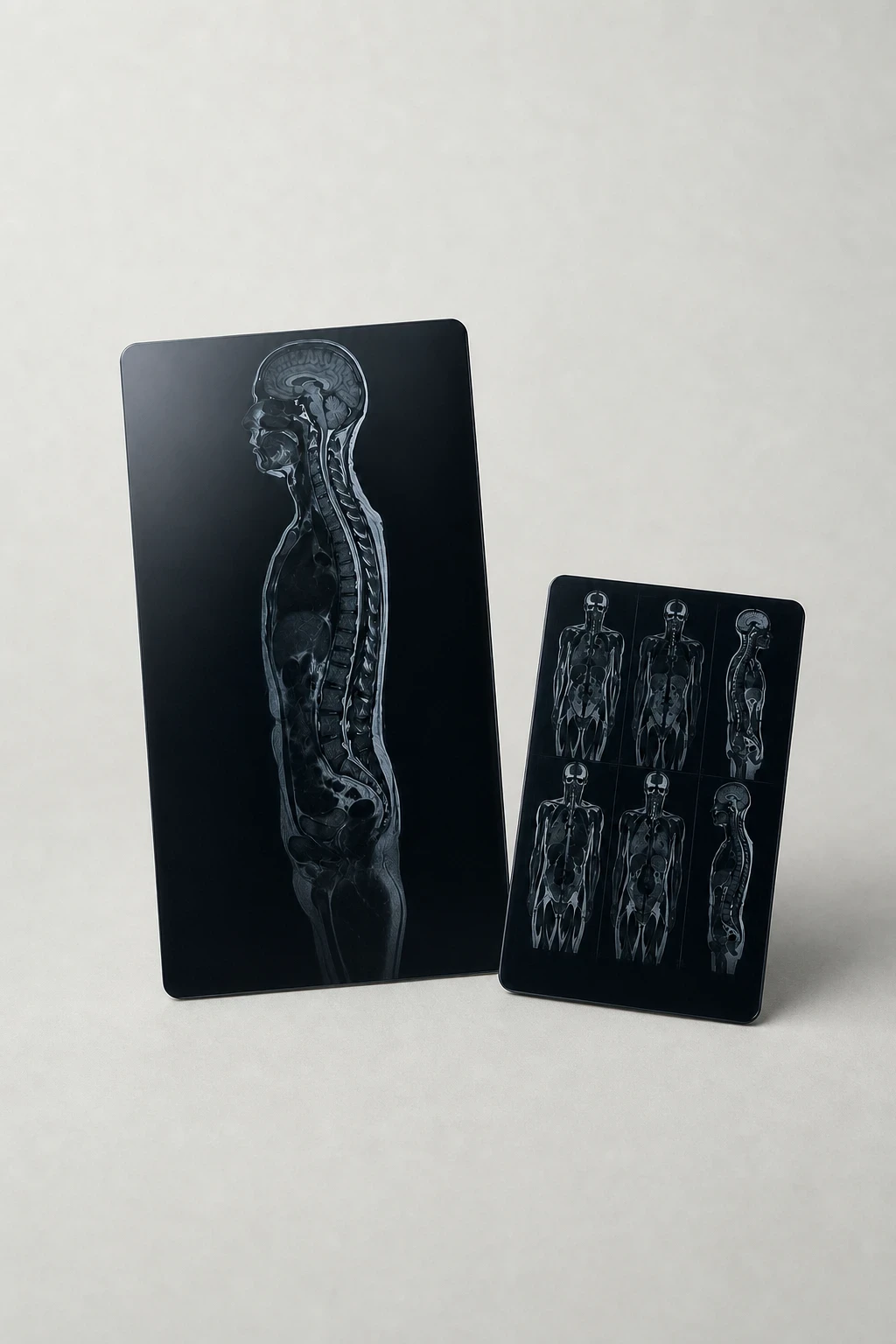
Stylised image of a Full Body MRI scan on a neutral background

Overall Health

Silent Brain Changes

45%

of people over 50 had evidence of a previous brain infarct (a “silent stroke”), compared with 22% of those 50 and under.

https://doi.org/10.1371/journal.pone.0107840

Fatty Liver

1 in 4

people over 50 had fatty liver, picked up on the protocol’s chemical-shift sequence (16% of those 50 and under).

https://doi.org/10.1371/journal.pone.0107840

Potential Detection of Early Pathology

1 in 64

scans found cancer in people without symptoms, in a meta-analysis of 10 studies covering 9,024 people.

https://pubmed.ncbi.nlm.nih.gov/40884613/

Silent Brain Changes

45%

of people over 50 had evidence of a previous brain infarct (a “silent stroke”), compared with 22% of those 50 and under.

https://doi.org/10.1371/journal.pone.0107840

Potential Detection of Early Pathology

1 in 64

scans found cancer in people without symptoms, in a meta-analysis of 10 studies covering 9,024 people.

https://pubmed.ncbi.nlm.nih.gov/40884613/

Fatty Liver

1 in 4

people over 50 had fatty liver, picked up on the protocol’s chemical-shift sequence (16% of those 50 and under).

https://doi.org/10.1371/journal.pone.0107840

Silent Brain Changes

45%

of people over 50 had evidence of a previous brain infarct (a “silent stroke”), compared with 22% of those 50 and under.

https://doi.org/10.1371/journal.pone.0107840

Fatty Liver

1 in 4

people over 50 had fatty liver, picked up on the protocol’s chemical-shift sequence (16% of those 50 and under).

https://doi.org/10.1371/journal.pone.0107840

Potential Detection of Early Pathology

1 in 64

scans found cancer in people without symptoms, in a meta-analysis of 10 studies covering 9,024 people.

https://pubmed.ncbi.nlm.nih.gov/40884613/

Person going into an MRI machine

WHY FULL BODY MRI

WHY FULL BODY MRI

Head to thigh, in one sitting

In about 60 minutes, an MRI scanner images your body from head to thigh, with no radiation. A radiologist reviews every region, and a Precursor clinician explains the results in the app. It's a structural scan, so it shows the shape of organs and tissue rather than blood markers. Your physician talks through what it can and can't show on a video call before your scan is booked.

At a glance
60 minutes

One sitting at a partner imaging centre

No radiation

MRI uses magnets, not X-rays

Radiologist-reported

Every region read by a specialist

Physician consult

Included, before your scan is booked

WHAT'S INCLUDED

From first touch point to final results

Start with a deposit today. A Precursor physician then has a quick video call with you to make sure the scan suits you. Once your booking is locked in, the remainder is charged.

Deposit today

Refunded if your physician finds the scan isn’t suitable.

$100

When your scan is booked

Charged to the same card, nothing more to do.

$2,799

*Not suitable if you have a pacemaker, defibrillator or certain other implants, or if you are pregnant. A Precursor physician goes through the safety questions with you on a quick video call before your scan.

Video consult with a physician

A quick video call with a Precursor physician to make sure the scan suits you, go through your safety questions, walk you through the process and answer anything you'd like to ask.

Booking handled for you

If the scan is right for you, we book you in at a partner imaging centre at a time that suits you, and take care of the paperwork.

Full Body MRI scan

Around 60 minutes at a partner imaging centre, head to thigh, with no radiation.

Radiologist report

A radiologist reviews the images across every region scanned.

Results and clinician review

Your findings explained in the Precursor app, with a clinician to talk you through what they mean.


light flare bokeh blue background

DIAGNOSTIC DETAILS

What it measures

The scan provides whole-body structural imaging, used to assess structural changes and abnormalities across multiple regions of the body.

Many Regions, One Sitting

A radiation-free survey of many areas of the body in a single scan, from the brain to the major organs. It casts a wide net in one visit, looking for changes that would otherwise go unnoticed until they cause symptoms.

Soft-Tissue Detail

Fine detail in organs and soft tissue that other scans can miss.

Radiation-Free Imaging

MRI uses powerful magnets rather than radiation, so a broad survey carries no radiation dose. That makes a whole-body look something you can sensibly repeat over time, reviewed in detail by a specialist.

Specialist Reviewed

Every scan read by a specialist and explained by your clinician.

HOW IT WORKS

From booking to your results

A broad look at your body should not mean a dozen appointments. Here is how a single Full Body MRI surveys many regions in one radiation-free sitting, from booking to reviewing your results.

Your Results Are In!

Tap to review your results and see what's next.

01

Book and meet your physician

Answer a few safety questions and choose where and when suits you. A Precursor physician then has a quick video call with you to make sure the scan suits you, walk you through the process and answer your questions.

02

Have your scan

You lie still inside the MRI scanner for around an hour while it surveys many regions of your body. The machine is noisy so you are given headphones, and there is no radiation involved.

03

Specialist review

A radiologist reviews the detailed images across every region scanned, from the brain to the major organs, looking for structural changes and abnormalities.

04

Results in the app

Your findings land in the Precursor app, explained clearly rather than in raw imaging terms, so a broad scan leads to understanding rather than a stack of technical images.

05

Review and plan

A clinician talks you through what the scan shows, including any incidental findings, calmly and clearly, and guides you on the sensible next step if anything needs a closer look.

HOW IT WORKS

From booking to your results

A broad look at your body should not mean a dozen appointments. Here is how a single Full Body MRI surveys many regions in one radiation-free sitting, from booking to reviewing your results.

Your Results Are In!

Tap to see what's next.

01

Book and meet your physician

Answer a few safety questions and choose where and when suits you. A Precursor physician then has a quick video call with you to make sure the scan suits you, walk you through the process and answer your questions.

02

Have your scan

You lie still inside the MRI scanner for around an hour while it surveys many regions of your body. The machine is noisy so you are given headphones, and there is no radiation involved.

03

Specialist review

A radiologist reviews the detailed images across every region scanned, from the brain to the major organs, looking for structural changes and abnormalities.

04

Results in the app

Your findings land in the Precursor app, explained clearly rather than in raw imaging terms, so a broad scan leads to understanding rather than a stack of technical images.

05

Review and plan

A clinician talks you through what the scan shows, including any incidental findings, calmly and clearly, and guides you on the sensible next step if anything needs a closer look.

HOW IT WORKS

From booking to your results

A broad look at your body should not mean a dozen appointments. Here is how a single Full Body MRI surveys many regions in one radiation-free sitting, from booking to reviewing your results.

Your Results Are In!

Tap to review your results and see

what's next.

01

Book and meet your physician

Answer a few safety questions and choose where and when suits you. A Precursor physician then has a quick video call with you to make sure the scan suits you, walk you through the process and answer your questions.

02

Have your scan

You lie still inside the MRI scanner for around an hour while it surveys many regions of your body. The machine is noisy so you are given headphones, and there is no radiation involved.

03

Specialist review

A radiologist reviews the detailed images across every region scanned, from the brain to the major organs, looking for structural changes and abnormalities.

04

Results in the app

Your findings land in the Precursor app, explained clearly rather than in raw imaging terms, so a broad scan leads to understanding rather than a stack of technical images.

05

Review and plan

A clinician talks you through what the scan shows, including any incidental findings, calmly and clearly, and guides you on the sensible next step if anything needs a closer look.

"A whole-body MRI lets us look broadly without radiation, which is rare and valuable. For the right person, finding something early and treatable is clearly the outcome we hope for."

"A whole-body MRI lets us look broadly without radiation, which is rare and valuable. For the right person, finding something early and treatable is clearly the outcome we hope for."
Goutham Sivasuthan. CEO and Co Founder of Precursor

Dr Goutham Sivasuthan

Dr Goutham Sivasuthan

Dr Goutham Sivasuthan

Precursor Co-Founder & CEO

TAKE CONTROL OF YOUR HEALTH

Book Your Full Body MRI Now

Book Your Full Body MRI Now

Find the precursor, shape the outcome.

FAQs

Your Questions, Answered

Do I need a GP referral for a Full Body MRI?

No. You don't need to see your GP first. After you book, you'll have a quick video call with a Precursor physician to make sure the scan suits you. They go through your safety answers, walk you through the process and answer your questions, then arrange the request your imaging centre needs.

Is a Full Body MRI covered by Medicare?

No. Medicare doesn't rebate whole-body MRI done for screening, so the scan is privately paid. The price covers your video consult with a Precursor physician, the scan, the radiologist's report and a review of your results.

Who shouldn't have a Full Body MRI?

MRI uses a strong magnet, so it isn't suitable for everyone. This includes people with a pacemaker or defibrillator, some other implants or devices, or metal fragments in the eyes, and people who are pregnant. You'll answer a few safety questions when you book, and a Precursor physician goes through them with you on a quick video call.

What if I'm claustrophobic?

Let us know in the safety questions. You'll lie inside the scanner for around an hour, and your Precursor physician can talk you through what to expect on your video call before the scan.

What can't a Full Body MRI show?

It's a broad structural survey, not a replacement for recommended screening such as mammograms, cervical screening or bowel cancer screening. It won't detect every condition, and some things are better assessed with other tests. Your clinician will help you understand where it fits for you.

What if the scan finds something unexpected?

Whole-body scans often find incidental things that turn out to be harmless but are worth a closer look. If something needs follow-up, your clinician explains what it means and guides you on the sensible next step.

How do I prepare for my scan?

Very little preparation is needed. Wear comfortable clothes without metal, and leave jewellery and other metal items at home or outside the scan room. We'll tell you about anything else when your scan is booked.

When will I get my results?

A radiologist reviews your images after the scan, and your results appear in the Precursor app with a clear explanation. We'll give you an expected timeframe when your scan is booked.

How does the $100 deposit work?

You pay a $100 deposit to book, and your card is saved securely by Stripe. After your video call, once your scan is booked, the remaining $2,799 is charged to that card. If your physician finds the scan isn't suitable for you, your deposit is refunded in full and nothing more is charged.

Full Body MRI

$2,899

macro photography of leaf

A new way Australians get ahead of their health.

Start looking. Today.

Curated diagnostics and a clinician-guided plan, built around getting ahead of what matters.

macro photography of leaf

A new way Australians
get ahead of their health.

Start looking. Today.

Curated diagnostics and a clinician-guided plan, built around getting ahead of what matters.

macro photography of leaf

A new way Australians get ahead of their health.

Start looking. Today.

Curated diagnostics and a clinician-guided plan, built around getting ahead of what matters.