Medically reviewed by Dr Goutham Sivasuthan Specialist Surgeon, MBBS, MSurg, BSc, Co-Founder and CEO of Precursor. AHPRA MED0002000354. Last reviewed 8th September 2026.
Cost: $100 - $200
Medicare: Not covered
Time: 10 to 15 minutes
Interval: As advised
A DEXA body-composition scan gives you a detailed baseline of fat, lean tissue and bone mineral. Repeated consistently, it can help show how your body changes over time.
Weight alone can hide useful detail. DEXA adds a regional view of body composition, which can support a more informed conversation about nutrition, movement and healthy ageing.
Why DEXA adds value beyond the scales
Two people can weigh the same while carrying different amounts of fat and lean tissue. DEXA separates these components and shows how they are distributed across the body. This provides a more useful baseline than weight alone for many health and performance goals. (1, 2)
The scan may report total body-fat percentage, fat mass and lean soft tissue. Some systems also provide regional results for the arms, legs and trunk, along with an estimate of visceral fat in the abdomen. (1, 2)
That detail makes change easier to understand. A stable weight can sit beside a shift in fat or lean tissue. When the same scanning method and preparation are used, repeat results can help show how your body is responding to a longer-term nutrition or exercise plan. (1)
What does a DEXA body-composition scan measure?
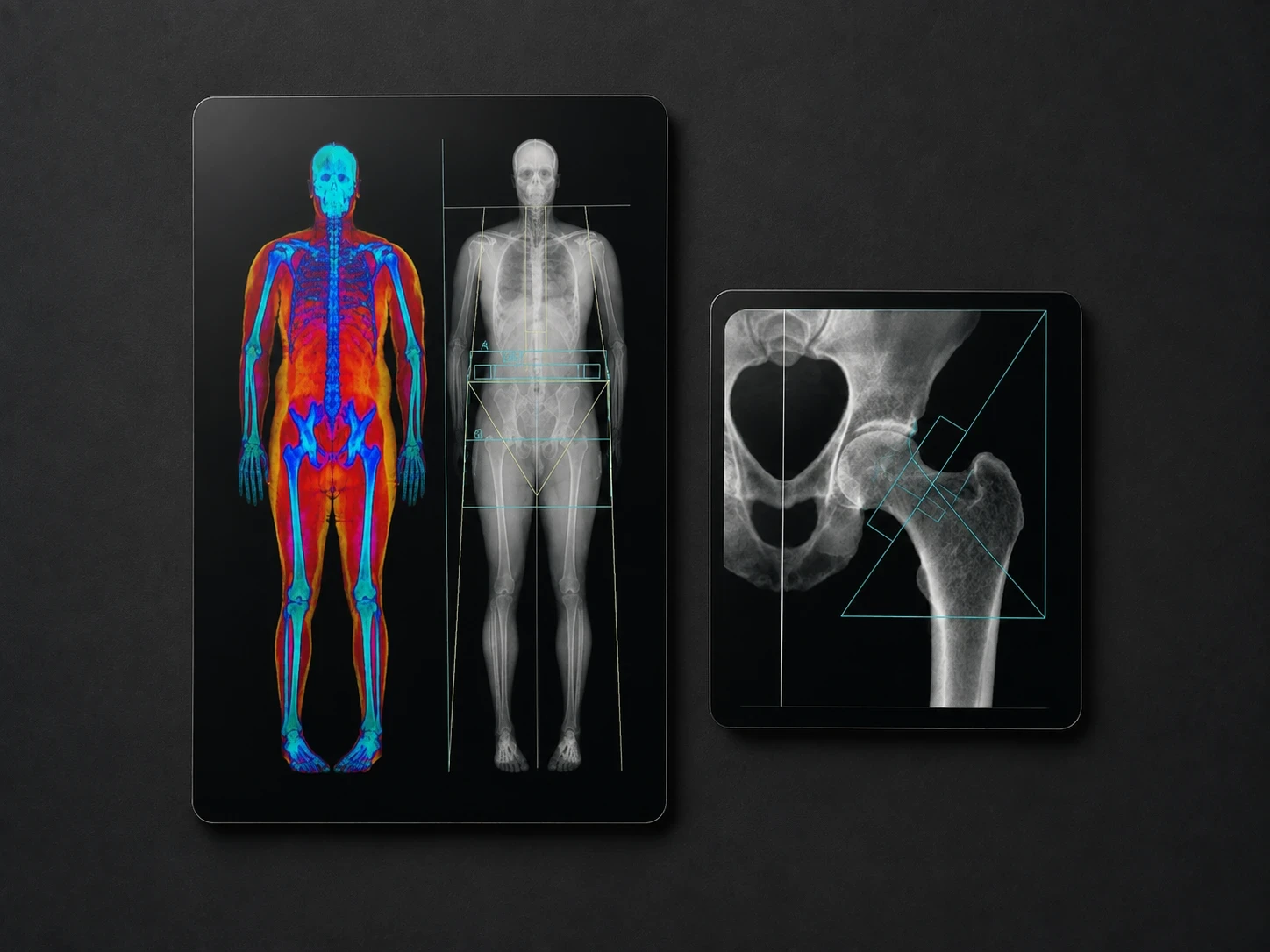
DEXA, also written DXA, stands for dual-energy X-ray absorptiometry. The scanner uses two low-dose X-ray energy levels to estimate fat, lean soft tissue and bone mineral. (1, 5)
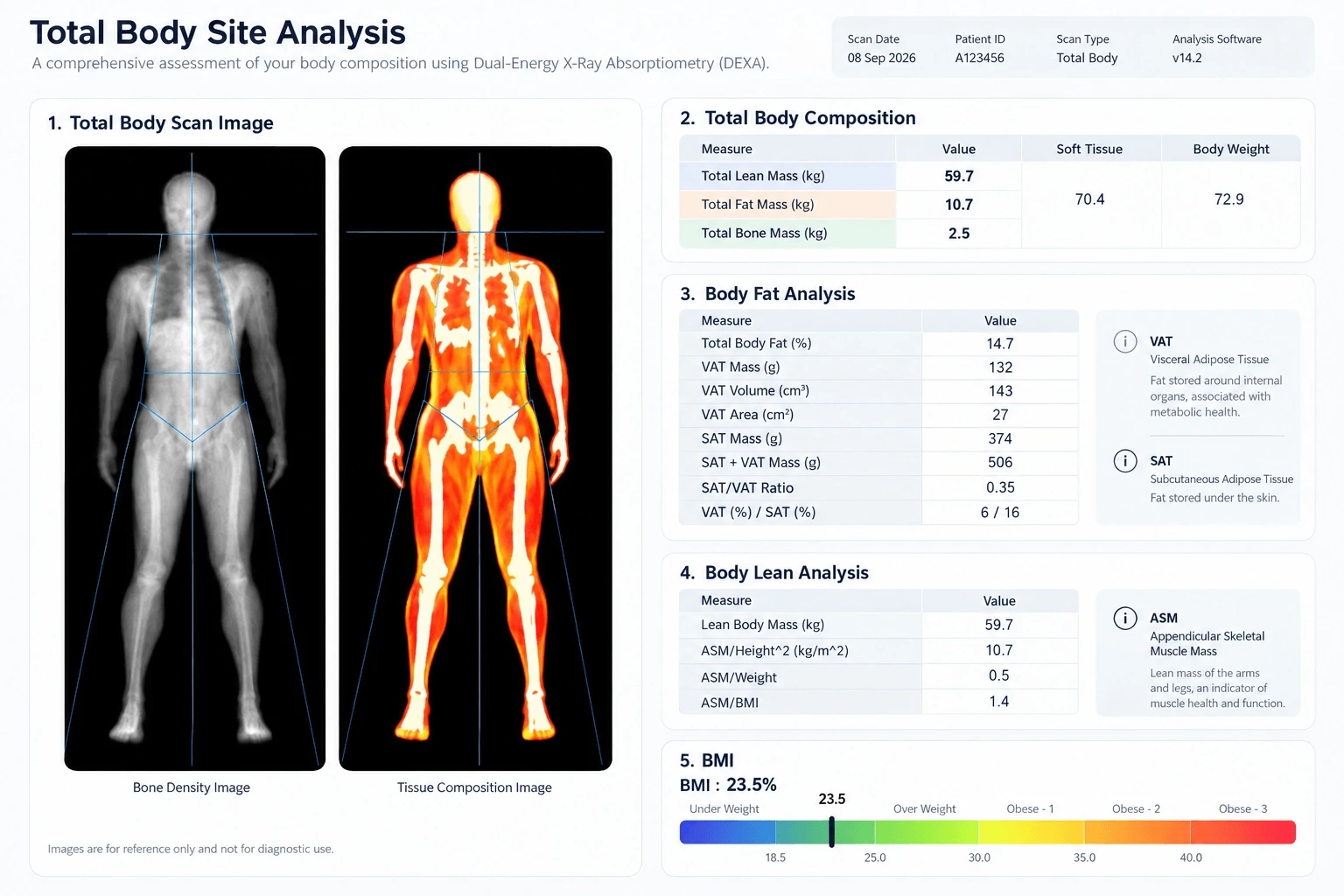
Lean soft tissue includes muscle, organs and body water. It is therefore broader than muscle alone. Regional lean results can still contribute useful information when they are considered beside strength, function and physical activity. (2)
Visceral-fat estimates describe fat within an abdominal region around internal organs. They can add context to a body-composition review, although they do not diagnose diabetes, fatty liver or cardiovascular disease. (2)
How body composition can support a longevity plan
Long-term health is built through changes that can be understood and sustained. DEXA gives you an objective baseline and a consistent way to revisit body composition after a period of training, nutrition support or recovery.
The Australian Institute of Sport describes body-composition assessment as a way to gain information about health or performance variables and monitor change after training or nutrition programs. Although its guidance is written for athletes, the measurement principle is useful more broadly: know why you are measuring, keep the method consistent and interpret the number in context. (1)
DEXA results can help a clinician or qualified health professional focus the conversation. A change in regional lean tissue may prompt a closer look at strength and activity. A fat-distribution result may sit beside blood pressure, lipids or glucose markers. The scan creates a clearer starting point; the broader health plan gives that information meaning.
Body composition and bone density
The same DXA technology is used for two different examinations. A whole-body body-composition scan estimates fat, lean tissue and bone mineral across the body. A diagnostic bone-density examination usually measures the hip and lumbar spine to assess osteoporosis and fracture risk. (3, 5)
Both can be valuable. The appropriate examination depends on the purpose. A person focused on changes from exercise may want body composition. Someone with a low-trauma fracture or another bone-health concern may need clinical bone-density measurements. Some appointments can include both examinations.
Medicare rebates for bone densitometry apply to defined clinical indications and item requirements. The cited Medicare item does not establish a rebate for elective consumer body-composition testing. (4)
A simple scan experience
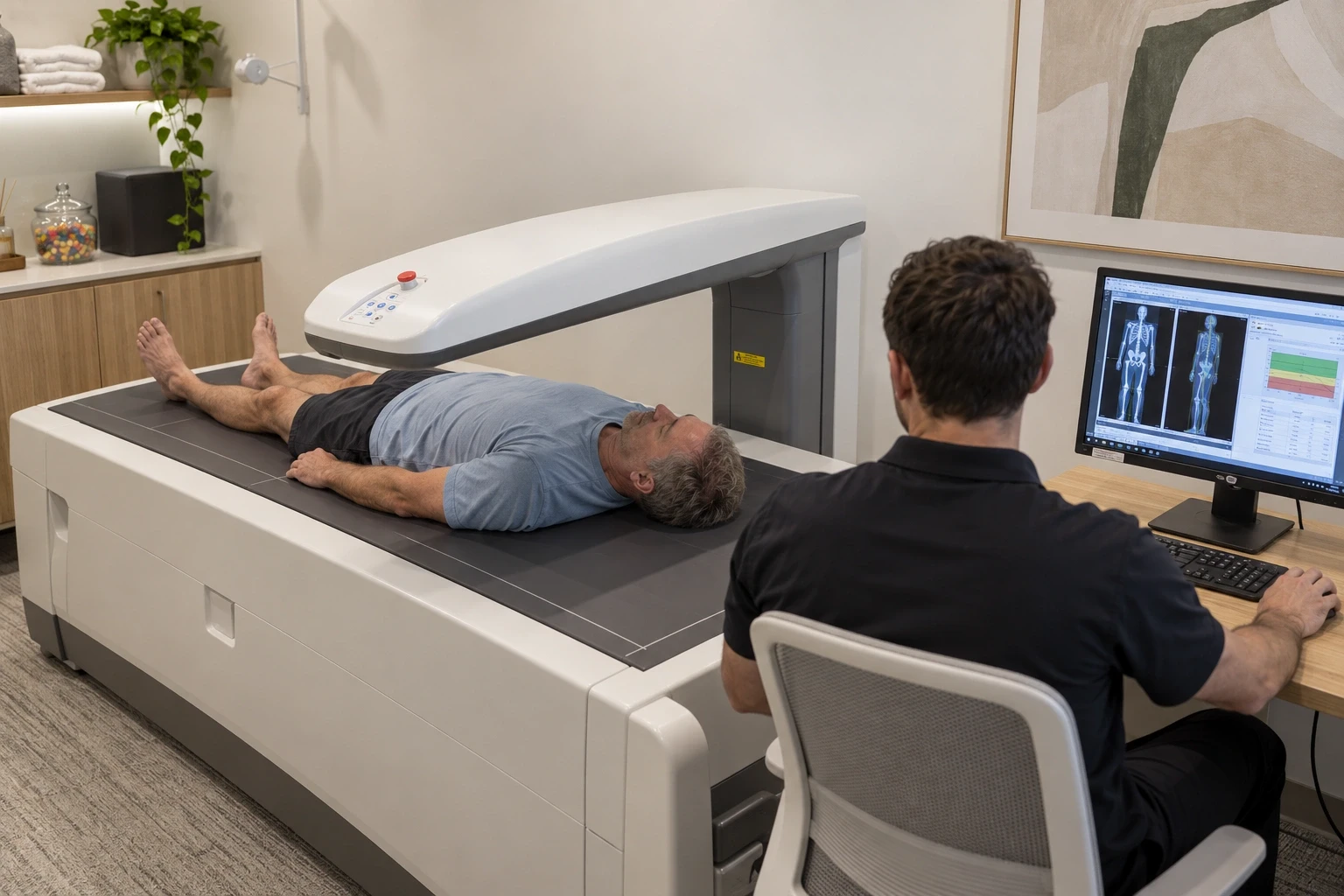
DEXA is quick, non-invasive and painless. You lie on an open padded table while a scanning arm passes above you. The operator positions you for consistent measurements, and you remain still for the short scan. (3, 5)
The open design may feel more comfortable for people who dislike enclosed imaging spaces. No anaesthetic is required. The examination uses a very low dose of ionising radiation, and no radiation remains in the body afterwards. (5)
DEXA body-composition scanning should not be performed during pregnancy. Anyone who may be pregnant should tell the service before the appointment. (2, 5)
Consistency makes repeat results more useful
Body composition changes gradually, and small differences can reflect food, fluids, exercise or positioning. A standard preparation routine improves the value of comparison. (1, 2)
The appointment instructions cover meals, hydration, activity, clothing and timing. Following the same routine before each scan reduces avoidable variation. Using the same scanner is also helpful because different systems may not produce directly comparable results. (2, 5)
Repeat timing should match the purpose of testing. A meaningful interval gives the plan time to work and makes change easier to distinguish from ordinary measurement variation.
Reading the report as a whole
Body-fat percentage is one useful measurement. Regional fat, lean tissue and bone-related values provide the rest of the picture. The result makes more sense when it is reviewed beside your goals, prior scan and relevant health markers.
This also keeps one number in proportion. Lean soft tissue does not directly measure strength. A visceral-fat estimate is not a diagnosis. Bone information on a body-composition report may differ from a clinical hip-and-spine bone-density result. (2, 3)
A supported results discussion can identify the measurement worth tracking and connect it with a practical next step. That may be maintaining a successful routine, adjusting a program or bringing a bone-health concern to your doctor.
DEXA with Precursor
Precursor uses diagnostics to make change visible and easier to discuss. A DEXA baseline can sit beside your other health information, helping you see what is changing and where your attention may be most useful.
Explore Precursor’s DEXA service to review the current pathway and see how the scan may fit your goals. Your result can then become part of a longer-term, clinician-guided view rather than an isolated number.
This information is general and does not replace advice from your treating doctor.
TAKE CONTROL OF YOUR HEALTH
Find the precursor, shape the outcome.
Sources
1.
2.
3.
4.
Frequently asked questions
What are the benefits of a DEXA body-composition scan?
DEXA estimates fat, lean soft tissue and bone mineral across the body, with regional detail that ordinary scales cannot provide. It creates a useful baseline for understanding change over time and can support a more focused discussion about nutrition, exercise and longer-term health goals. (1, 2)
Can DEXA show whether my health plan is working?
Repeat DEXA scans can show changes in estimated fat and lean tissue when the same scanner, preparation and positioning are used. The results are best considered beside strength, fitness and relevant health markers. This helps separate a meaningful trend from a change in one number alone. (1, 2)
Does DEXA measure muscle and visceral fat?
DEXA estimates lean soft tissue, which includes muscle as well as organs and body water. Some systems also estimate visceral fat within an abdominal region. These results add useful context, but lean tissue is not a direct strength test and visceral fat is not a diagnosis. (1, 2)
Is body-composition DEXA the same as a bone-density scan?
Both use DXA technology, but they answer different questions. Body composition estimates fat and lean tissue across the body. Diagnostic bone-density testing generally measures the hip and spine to assess osteoporosis and fracture risk. An appointment may include one examination or both. (2, 3, 5)
Is a DEXA scan quick and comfortable?
Yes. You lie on an open padded table while the scanner passes above you. The examination is non-invasive, painless and usually brief. There is no enclosed tunnel and no anaesthetic is required, so you can generally return to your usual day afterwards. (3, 5)
Does a DEXA scan use radiation?
Yes. DEXA uses a very low dose of ionising radiation to create its measurements. No radiation remains in the body after the scan. The dose is still considered when deciding whether testing is appropriate, and body-composition DEXA is not performed during pregnancy. (2, 5)
How often can DEXA track body-composition change?
The useful interval depends on the purpose of testing and how quickly meaningful change is expected. Repeat scans work best when preparation, positioning and equipment stay consistent. A clinician or qualified health professional can help choose an interval that reflects your plan rather than ordinary measurement variation. (1, 2)
Can DEXA support healthy ageing?
DEXA can support healthy-ageing conversations by showing estimated fat distribution, regional lean tissue and bone-related measurements. These results may help focus attention on strength, movement, nutrition or bone health. The scan does not predict lifespan; its value comes from connecting the measurements with an appropriate plan. (1, 2, 5)