Understanding DEXA results: a clearer view of body change
A DEXA report turns body composition into a useful long-term baseline. Here is how fat, lean tissue, visceral fat and bone measurements fit together.
Written by: Gareth Shelwell
Read time: 7 minutes
The value is in the pattern, not one headline number
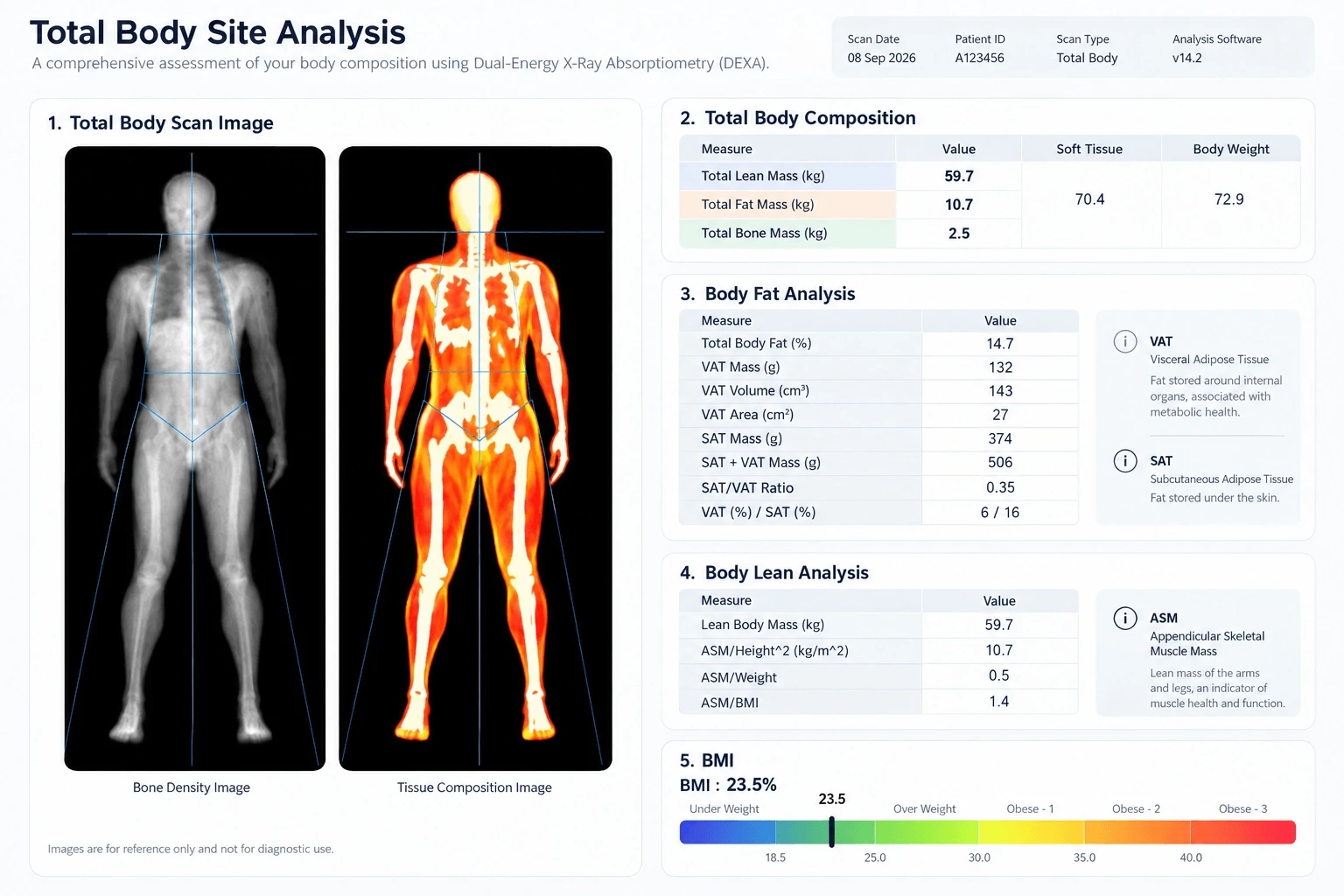
It is natural for body-fat percentage to catch your eye first. A DEXA body-composition report contains more than that one figure. It can show total and regional fat mass, lean soft tissue, bone mineral and, on some systems, an estimate of visceral fat.
Together, those measurements create a more detailed view than body weight alone. They can help you notice where change is occurring, establish a baseline and follow a health or performance plan over time. The most useful interpretation looks at the pattern across the report and connects it with your goals. (1)
What to know
Body-fat percentage is one part of a regional body-composition picture. (1)
Lean soft tissue includes muscle, organs and body water; it is not a direct strength test. (2, 3)
Visceral fat is an estimate for an abdominal region, not a diagnosis. (1, 4)
Repeat scans are most useful when the scanner, positioning and preparation stay consistent. (1)
Body-fat percentage and fat mass
Body-fat percentage describes the proportion of measured body mass attributed to fat. Fat mass expresses the estimated amount in kilograms. A whole-body percentage and a percentage for one region describe different things, so the label matters. (1)
Regional results can reveal a shift that total body weight hides. For example, a person's weight may remain similar while fat mass and lean tissue move in different directions. That is one reason DEXA can provide a useful baseline for a longer-term nutrition, movement or strength plan.
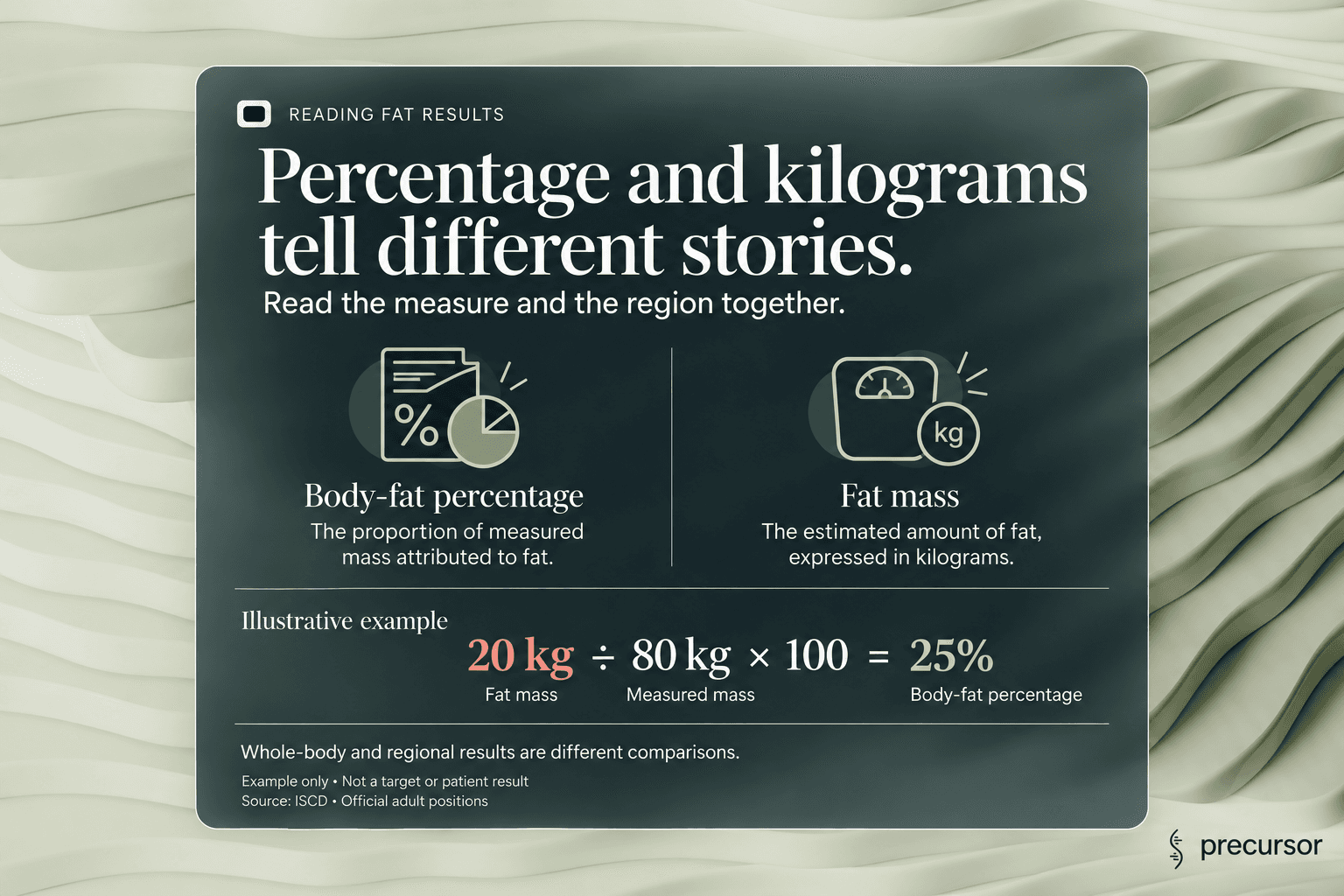
There is no single DEXA body-fat percentage that defines health for everyone. The International Society for Clinical Densitometry has not established universal DXA thresholds for defining obesity. Age, sex, health history, goals and the comparison population used by the software all affect context. (1)
The practical value is therefore not a perfect number. It is a clear starting point and a consistent way to observe meaningful direction.
Lean tissue: useful detail beyond body weight
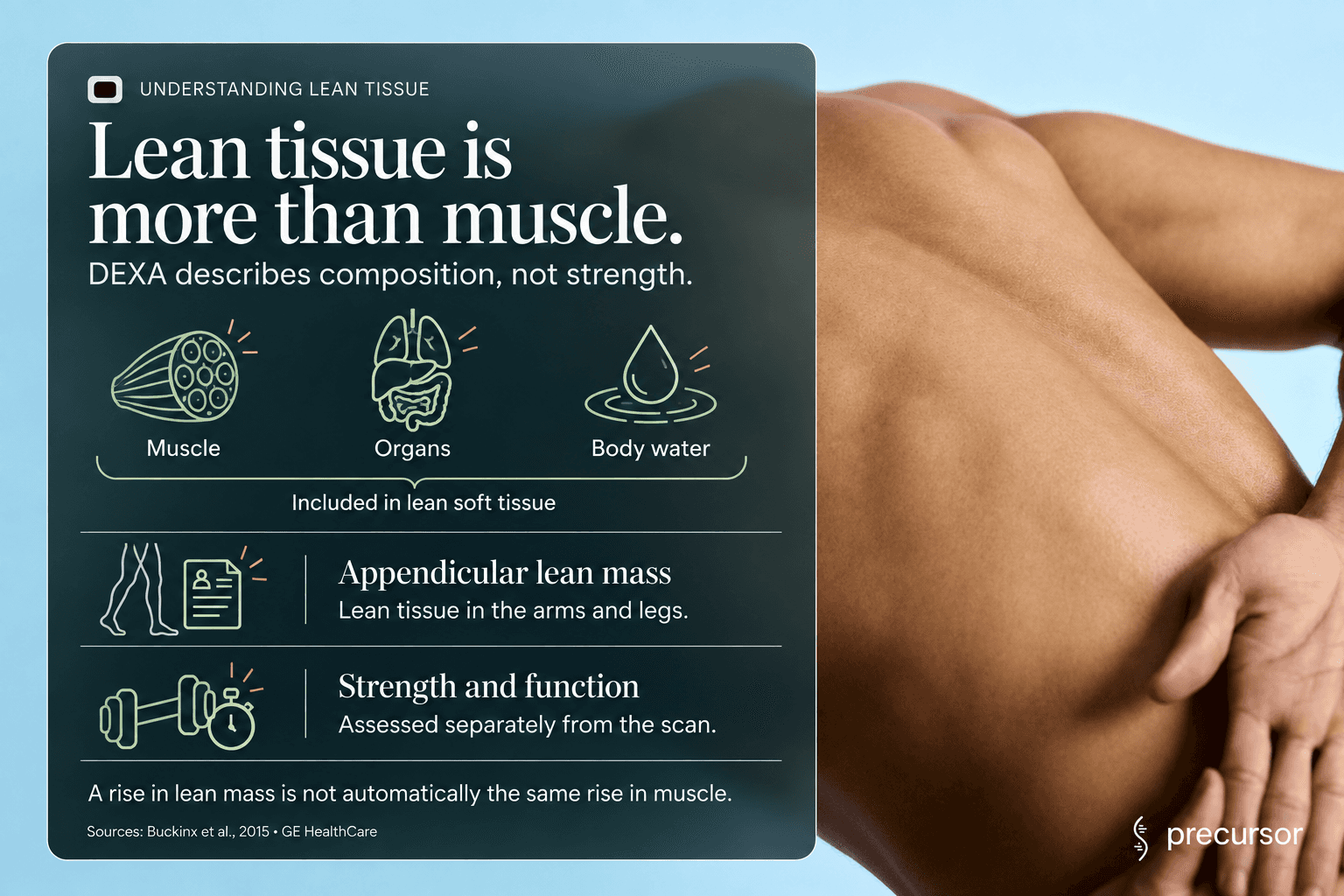
DEXA estimates lean soft tissue after separating fat and bone mineral. Lean soft tissue includes skeletal muscle, but it also includes organs and body water. An increase in lean mass should not be translated automatically into exactly the same increase in muscle. (2)
Regional lean-tissue results can still be valuable. Measurements for the arms and legs can contribute to a broader view of muscle quantity. “Appendicular lean mass” is the lean tissue in the limbs and may appear in assessments related to muscle health. (2, 3)
Strength and physical function come from outside the scan. Some clinical applications combine lean-mass information with strength and performance measures when considering sarcopenia. This is a helpful model for interpretation: use the scan to show composition, then place it beside how the body actually moves and performs. (3)
Visceral fat adds an abdominal perspective
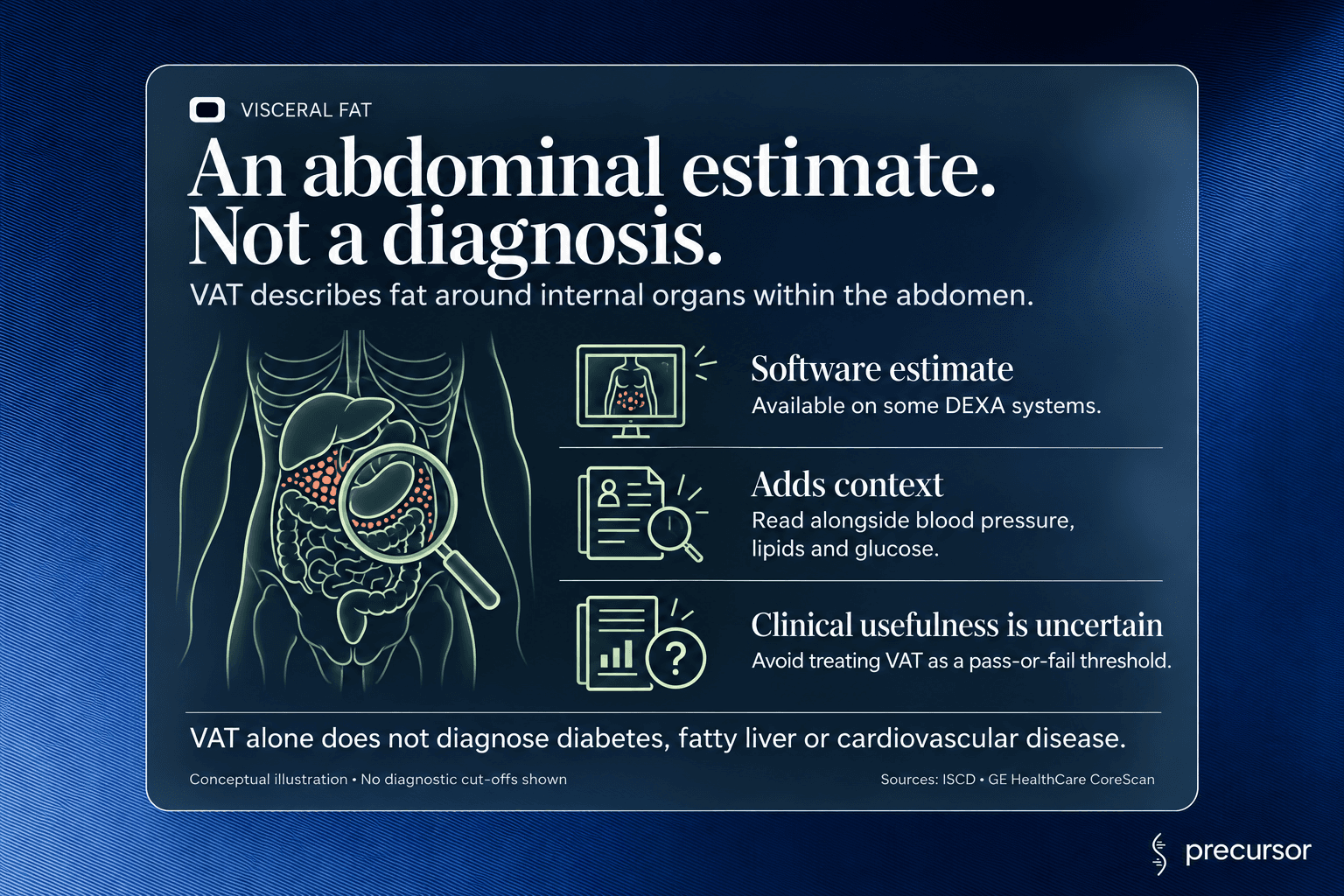
Visceral adipose tissue, often shortened to VAT, is fat located within the abdomen around internal organs. (4)
The estimate can add another perspective to total body-fat percentage because fat distribution matters. It may help focus a discussion about movement, nutrition, blood pressure, lipids or glucose markers.
VAT on a DEXA report is not a diagnosis of diabetes, fatty liver or cardiovascular disease. The International Society for Clinical Densitometry describes the clinical usefulness of optional measures such as visceral fat as uncertain. It is best used as contextual information rather than a pass-or-fail threshold. (1, 4)
Bone measurements need the right label
A body-composition report may include bone mineral content, or BMC. This describes the mineral component measured within the whole-body analysis.
Clinical bone mineral density, or BMD, is a different assessment. It commonly uses measurements at the hip and lumbar spine to evaluate osteoporosis and fracture risk. A whole-body composition result should not be assumed to include the site-specific examination used for diagnosis. (1, 5)
When a diagnostic bone-density report includes T-scores or Z-scores, the comparison group differs. A T-score compares the measurement with a young-adult reference and is usually used after menopause and in men aged 50 or older. A Z-score compares the result with an age- and sex-matched reference group and is generally used in younger adults. (5)
These scores sit within a clinical assessment. Fracture history, the measurement site and other health information help determine what the result means.
How repeat DEXA scans show change
A first scan creates a reference point. A later scan can show whether estimated fat and lean tissue moved in the intended direction. This is where body composition can become especially useful for long-term planning.
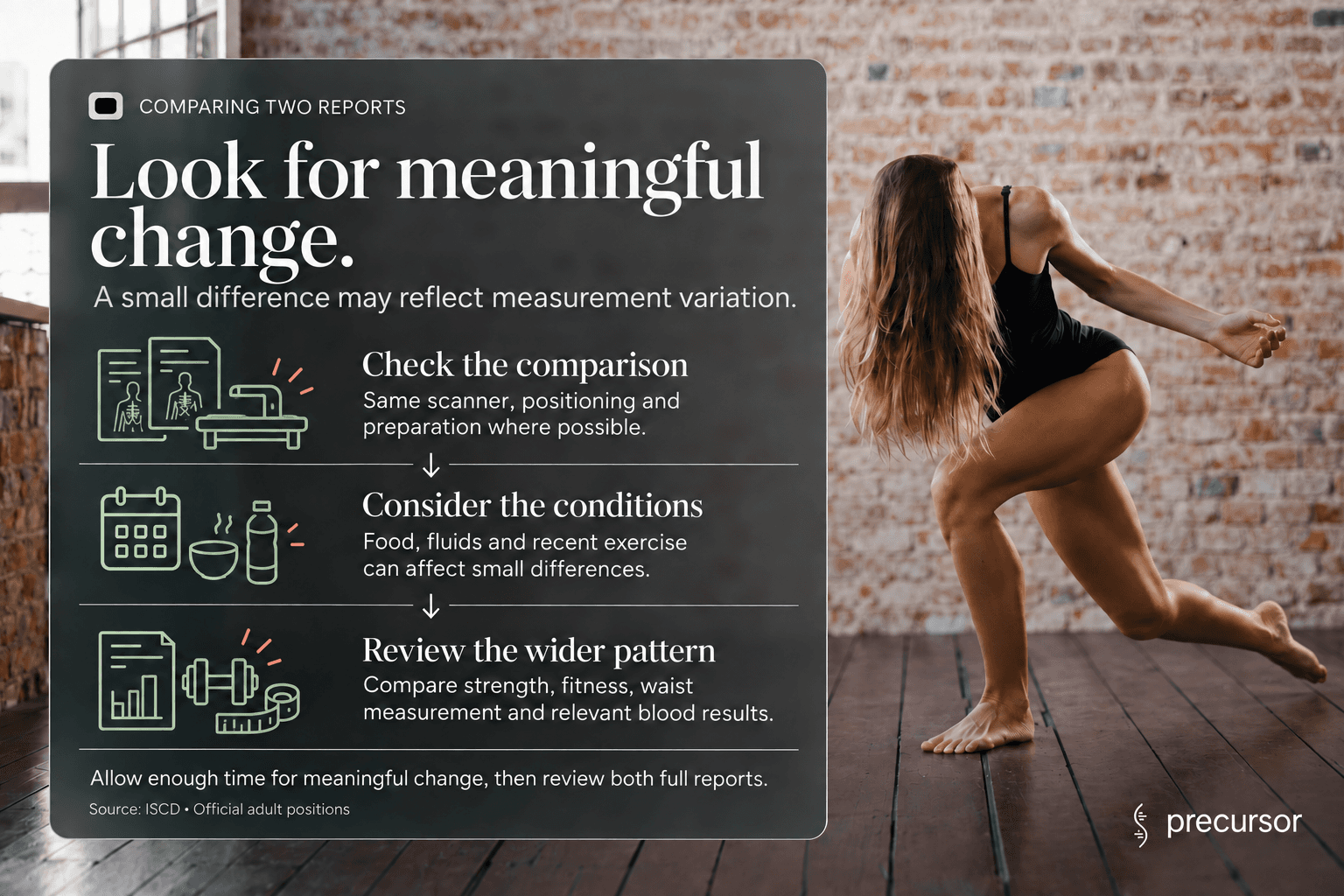
Small differences need proportion. Food, hydration, recent exercise, positioning and the scanner itself can influence measurements. Consistent preparation and the same equipment make the comparison more meaningful. The International Society for Clinical Densitometry also recognises the role of precision and cross-calibration when scanners differ. (1)
The interval should be long enough for meaningful change to occur. The report then works best beside other evidence: strength, fitness, waist measurement, recovery, symptoms and relevant blood results. One measure can confirm another, or show where the plan deserves a closer look.
From report to a longer-term plan
A useful results discussion begins with the purpose of the scan. For a strength goal, regional lean tissue may matter more than a small change in total weight. For a metabolic-health focus, body-fat distribution may sit beside blood pressure, lipids and glucose. For bone health, the correct site-specific examination matters.
This keeps the report constructive. A stable result may show that a routine is maintaining progress. A meaningful shift may support continuing the current plan or refining it. An unexpected result can direct attention to a more appropriate assessment.
Detailed body-composition information is not helpful for everyone. The Australian Institute of Sport recognises that repeated measurement or emphasis on body-fat numbers can be harmful for people vulnerable to disordered eating. The purpose, timing and way results are shared should support health rather than fixation. (6)
A positive next step with Precursor
Precursor places diagnostic information in a wider health context. A DEXA result can become a clear baseline rather than an isolated score, helping you follow changes that body weight alone may not reveal.
Explore Precursor's DEXA service or read the DEXA scan guide for an overview of the examination. A well-labelled report and a consistent future comparison can make the information more useful over time.
This article provides general information and does not replace individual medical advice.
Frequently asked questions
What does a DEXA body-composition report show?
A DEXA report can show estimated fat mass, body-fat percentage, lean soft tissue and bone mineral, often for the whole body and separate regions. Some systems also estimate visceral fat. Together, the measurements create a more detailed baseline than body weight alone. (1, 4)
How can DEXA results support a longevity plan?
DEXA can provide a consistent baseline for following fat distribution and regional lean tissue over time. Those trends may help focus attention on nutrition, strength, movement or bone health. The scan does not predict lifespan; its value comes from connecting measured change with a broader, sustainable health plan. (1, 3)
Does lean mass on a DEXA scan mean muscle?
Lean soft tissue includes muscle, organs and body water, so it is broader than muscle alone. Regional lean measurements can still add useful information about muscle quantity when they are considered alongside strength, physical function and activity. The scan describes composition; it does not directly test performance. (2, 3)
What does visceral fat mean on a DEXA report?
Visceral fat is a software estimate of fat within an abdominal region around internal organs. It can add context to the distribution of body fat, but it does not diagnose diabetes, fatty liver or cardiovascular disease. The estimate is best interpreted beside other relevant health markers. (1, 4)
Can a body-composition DEXA result assess osteoporosis?
A body-composition report may include whole-body bone mineral values, but osteoporosis assessment generally uses site-specific bone-density measurements at the hip and spine. T-scores or Z-scores from the appropriate examination are interpreted with fracture history and other clinical information. (1, 5)
How should two DEXA results be compared?
The strongest comparison uses the same scanner, positioning and preparation routine after enough time for meaningful change. Food, fluids and recent exercise can affect small differences. Reviewing both full reports alongside strength, fitness and relevant health markers helps show whether the overall pattern is useful. (1)
Sources
International Society for Clinical Densitometry (ISCD)
Official adult positions, 2023Buckinx and colleagues
Concordance between muscle mass assessed by BIA and DXA, BMC Musculoskeletal Disorders, 2015GE HealthCare
Body-composition applications, including sarcopenia assessmentGE HealthCare
CoreScan: software estimation of visceral fatNational Institute of Arthritis and Musculoskeletal and Skin Diseases (NIAMS)
Bone mineral density tests: what the numbers meanAustralian Institute of Sport
Body-composition considerations relating to disordered eating