Can a full-body MRI detect cancer?
A whole-body MRI can detect some cancers, but it cannot detect every cancer or show that screening improves survival for average-risk people. The limits matter as much as the images.

Written by: Gareth Shelwell
Read time: 4 minutes
The direct answer
Yes, a full-body MRI may detect some cancers or findings that lead to a cancer diagnosis. It is not a universal cancer test. Performance varies by cancer type, size, location and scan protocol, and some important cancers are better assessed with other tests.
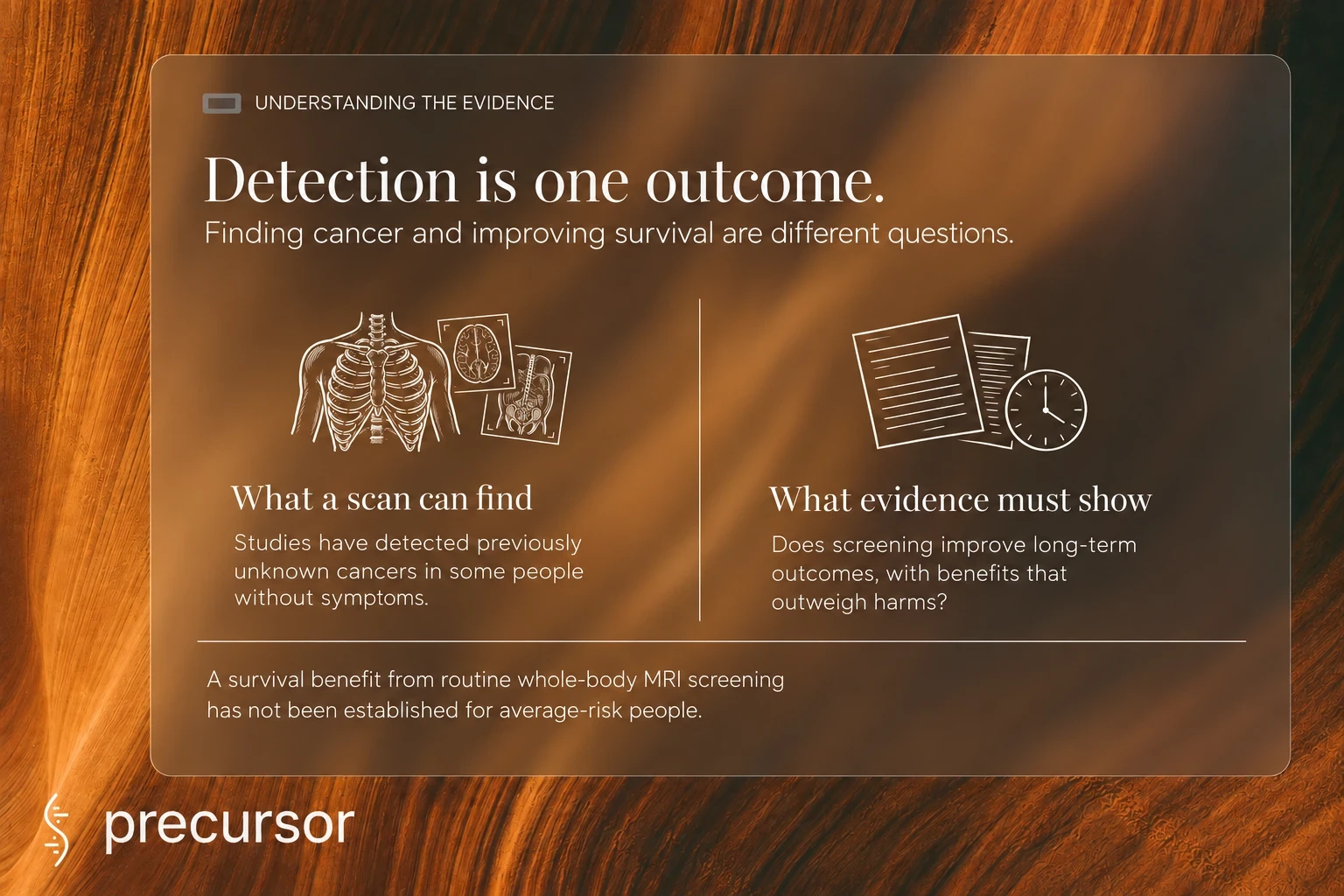
A 2026 meta-analysis of 10 studies and 9,024 asymptomatic adults reported a pooled confirmed cancer detection rate of 1.57%. The authors also found unstandardised protocols, frequent incidental findings and limited evidence about long-term outcomes or cost-effectiveness. Detection is not the same as proving that a screening program helps people live longer. (6)
What to know
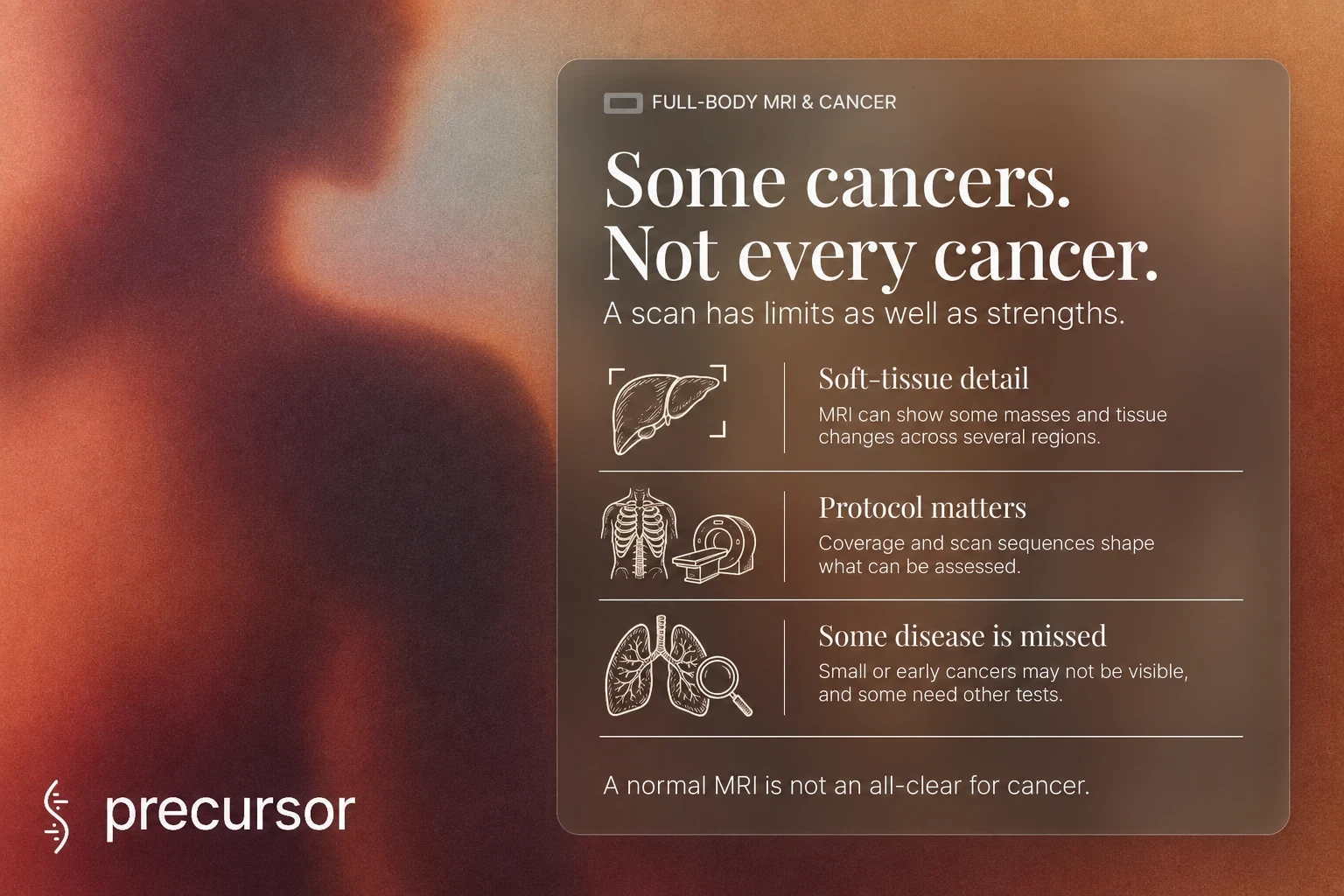
Whole-body MRI can show some masses and tissue changes across several regions.
It can miss small or early disease and cancers that require a different screening method.
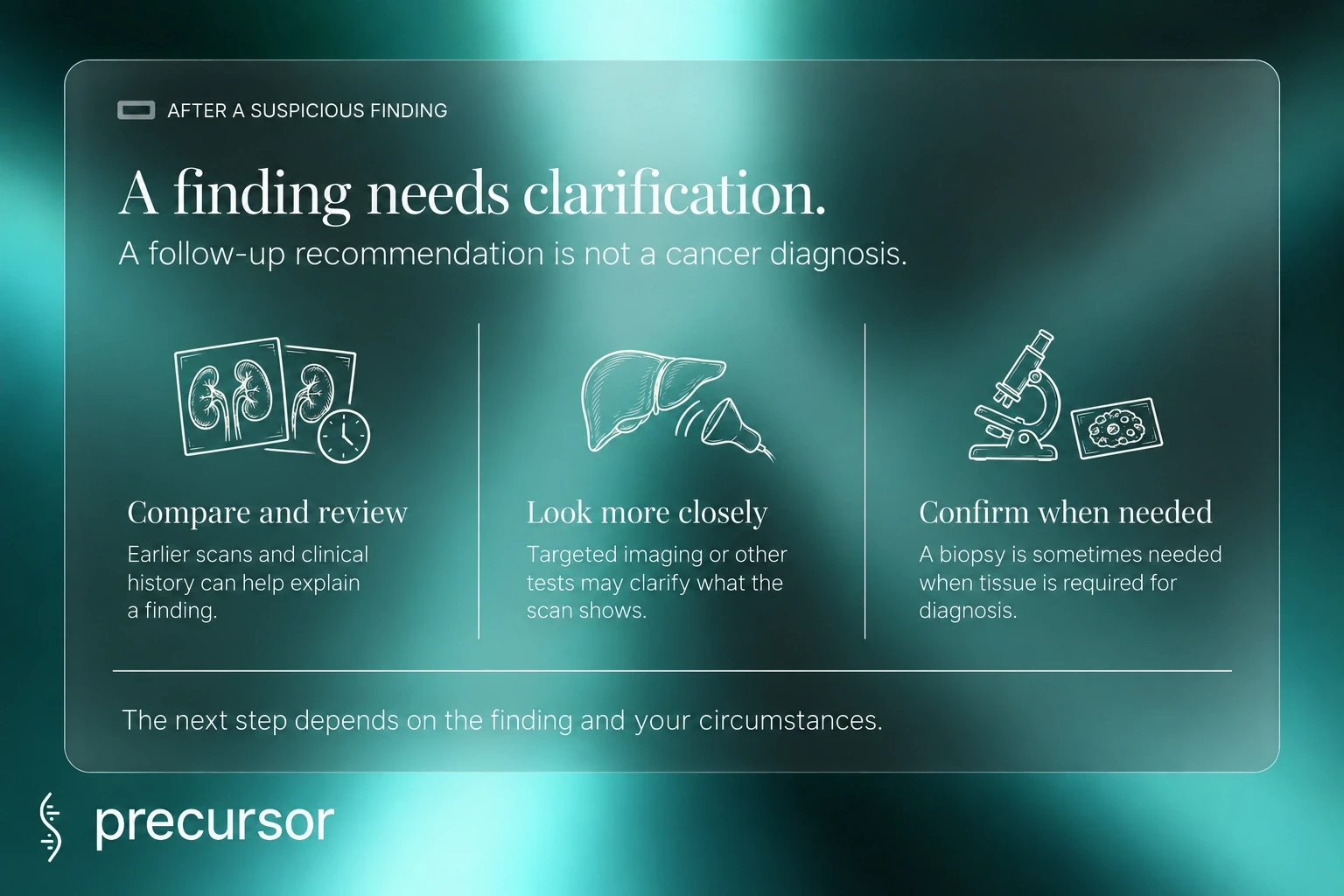
A suspicious image is not a diagnosis; targeted imaging or biopsy may be needed.
National breast, bowel, cervical and lung screening programs still matter. (4)
Why some cancers can be seen
MRI is good at showing differences between many soft tissues. Depending on the protocol, a radiologist may see a mass, an altered tissue signal, enlarged lymph nodes or another change that deserves focused assessment.
The protocol sets the boundaries. A broad scan usually uses a limited number of sequences across multiple regions. A targeted MRI can spend more time on one organ, use specialised sequences or add contrast to answer a specific question.
Why a scan can miss cancer
No screening test detects every cancer. Whole-body MRI may be less sensitive for very small lesions, some lung cancers, calcified abnormalities and disease that does not create a clear structural change. Motion, body habitus and technical factors can also affect image quality.
A false negative occurs when disease is present but the test does not identify it. This is why a normal result must not delay assessment of symptoms or replace a screening program designed for a particular cancer.
Why suspicious does not mean cancer
MRI often shows cysts, scars, benign growths and normal variations. Some are easy to classify. Others are indeterminate, meaning the images alone cannot show exactly what they are.
The next step might be an ultrasound, a dedicated MRI, CT, blood test, comparison with an older scan or specialist review. A biopsy is sometimes needed. A report that recommends follow-up is not itself a cancer diagnosis.
What professional guidance says
RANZCR does not recommend whole-body MRI screening for asymptomatic people without a previous malignancy or cancer-predisposition syndrome. The ACR similarly says evidence is insufficient to recommend total-body screening for people without symptoms, risk factors or relevant family history. (2, 3)
High-risk surveillance is different. Some people with an inherited cancer syndrome may have whole-body MRI within a specialist-led program. In Australia, MBS item 63564 covers an annual whole-body MRI for eligible people with a qualifying TP53 variant under specific requesting conditions. (7)
Do not replace established screening
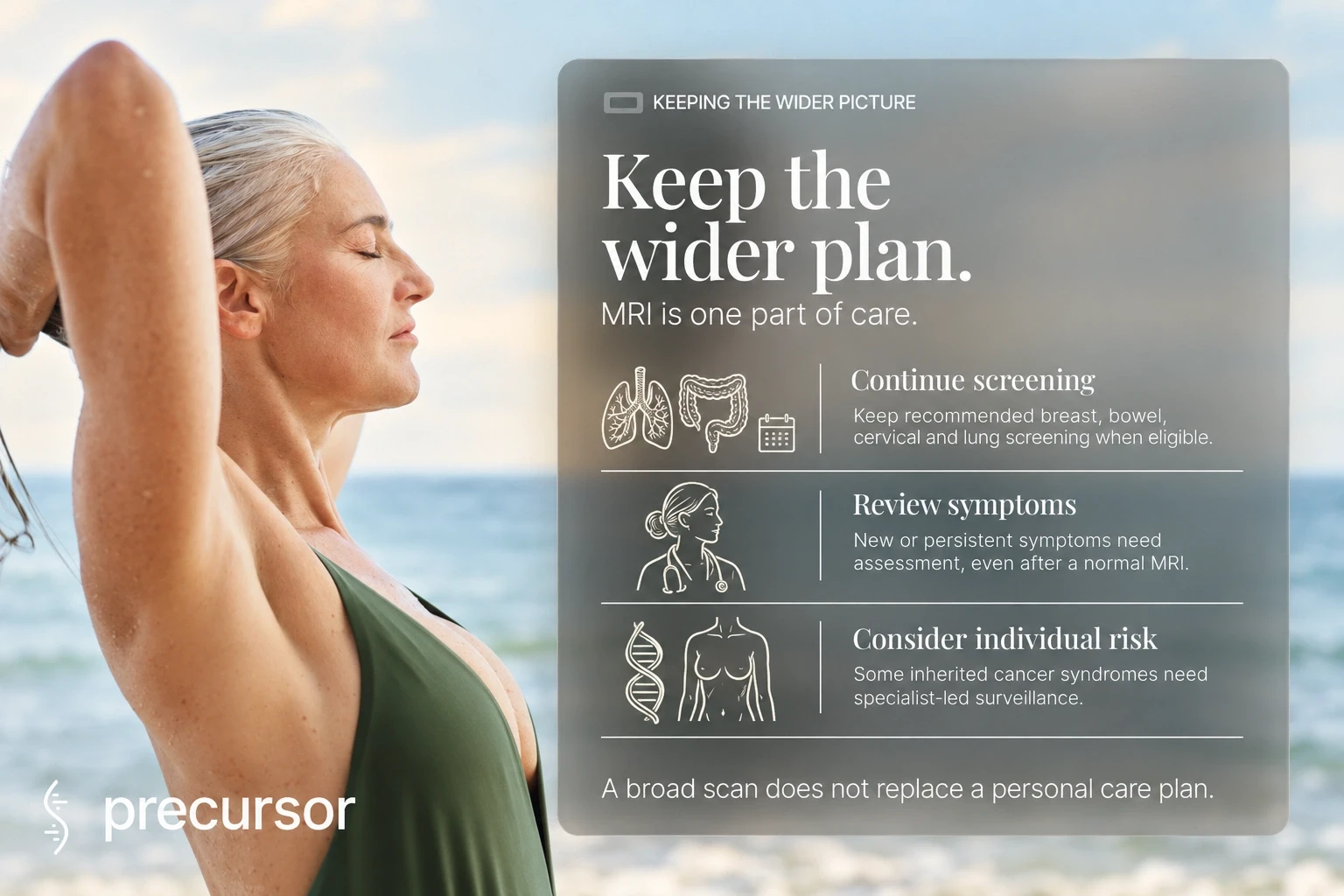
Australia has population screening programs for breast, bowel, cervical and lung cancer. Each has its own eligibility and test. Whole-body MRI does not replace mammography, bowel testing, cervical screening or low-dose CT in eligible people. (4)
Symptoms need their own pathway. A new lump, unexplained bleeding, persistent cough, neurological change, unexplained weight loss or ongoing pain should be assessed by a clinician even after a normal screening MRI.
A more useful question before booking
Instead of asking whether the scan can find cancer, ask which cancers and regions the protocol can assess reasonably, what it is likely to miss and who will manage uncertain findings. That turns a broad promise into a decision you can evaluate.
Read the full Australian guide
This article provides general information and does not replace medical advice, recommended screening or assessment of symptoms.
Frequently asked questions
Can a full-body MRI give me an all-clear for cancer?
No. A normal report means no concerning finding was identified within that protocol. Some cancers are too small, outside the covered anatomy or better detected by another test.
Does MRI find cancer before symptoms?
Sometimes. Research studies have found previously unknown cancers in a small proportion of asymptomatic participants. That does not establish a survival benefit for routine average-risk screening. (6)
Will a suspicious finding need a biopsy?
Not always. Many findings can be clarified with comparison, targeted imaging or clinical review. A biopsy is used when tissue is needed for a diagnosis.
Who may need whole-body MRI surveillance?
Some people with defined inherited cancer syndromes or a previous malignancy may have surveillance under a specialist team. This is different from consumer screening in an average-risk person.
Sources
Healthdirect Australia
MRI scanRANZCR
Whole Body MRI Screening in Low Risk Patients Position StatementAmerican College of Radiology
ACR Statement on Screening Total Body MRIAustralian Government Department of Health
Screening for cancerKwee and Kwee
Systematic review of whole-body MRI screeningFonseca and colleagues
Meta-analysis of opportunistic cancer detectionMedicare Benefits Schedule
Whole-body MRI item 63564Therapeutic Goods Administration
Gadolinium-based contrast agents safety alert