DEXA body composition vs bone density: two useful views
DEXA can describe body composition or assess bone density. Understanding the difference helps you choose a scan that matches your long-term health goals.
Written by: Gareth Shelwell
Read time: 7 minutes
One technology, two valuable examinations
The word DEXA, also written DXA, appears in both body-composition and bone-health appointments. The same underlying technology is used, but the examinations are designed to answer different questions.
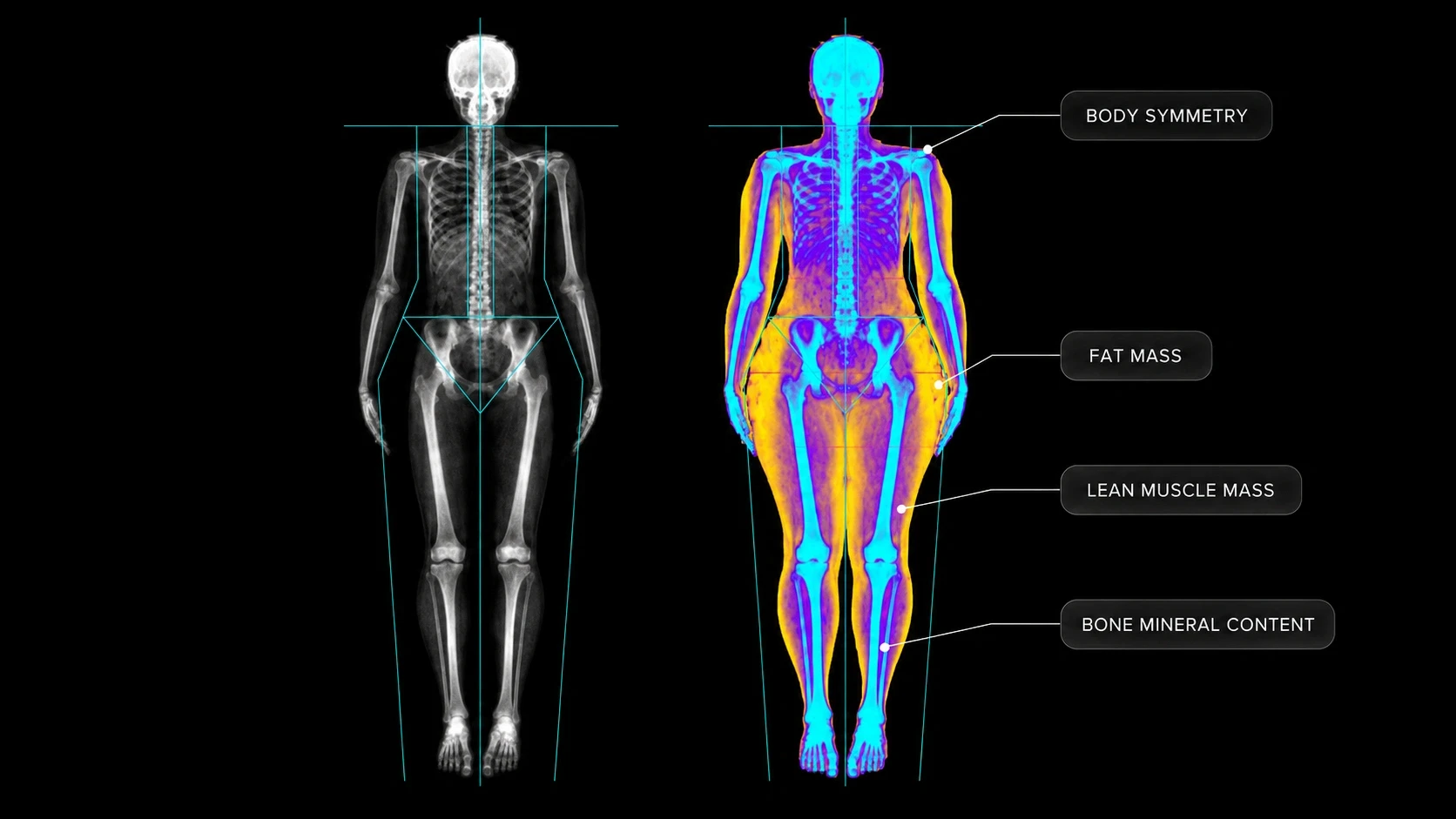
A whole-body composition scan estimates fat, lean soft tissue and bone mineral across the body. A diagnostic bone-density scan generally measures specific areas such as the hip and lumbar spine to assess bone strength and fracture risk. Both can contribute useful information to a proactive health plan. (1, 2, 3)
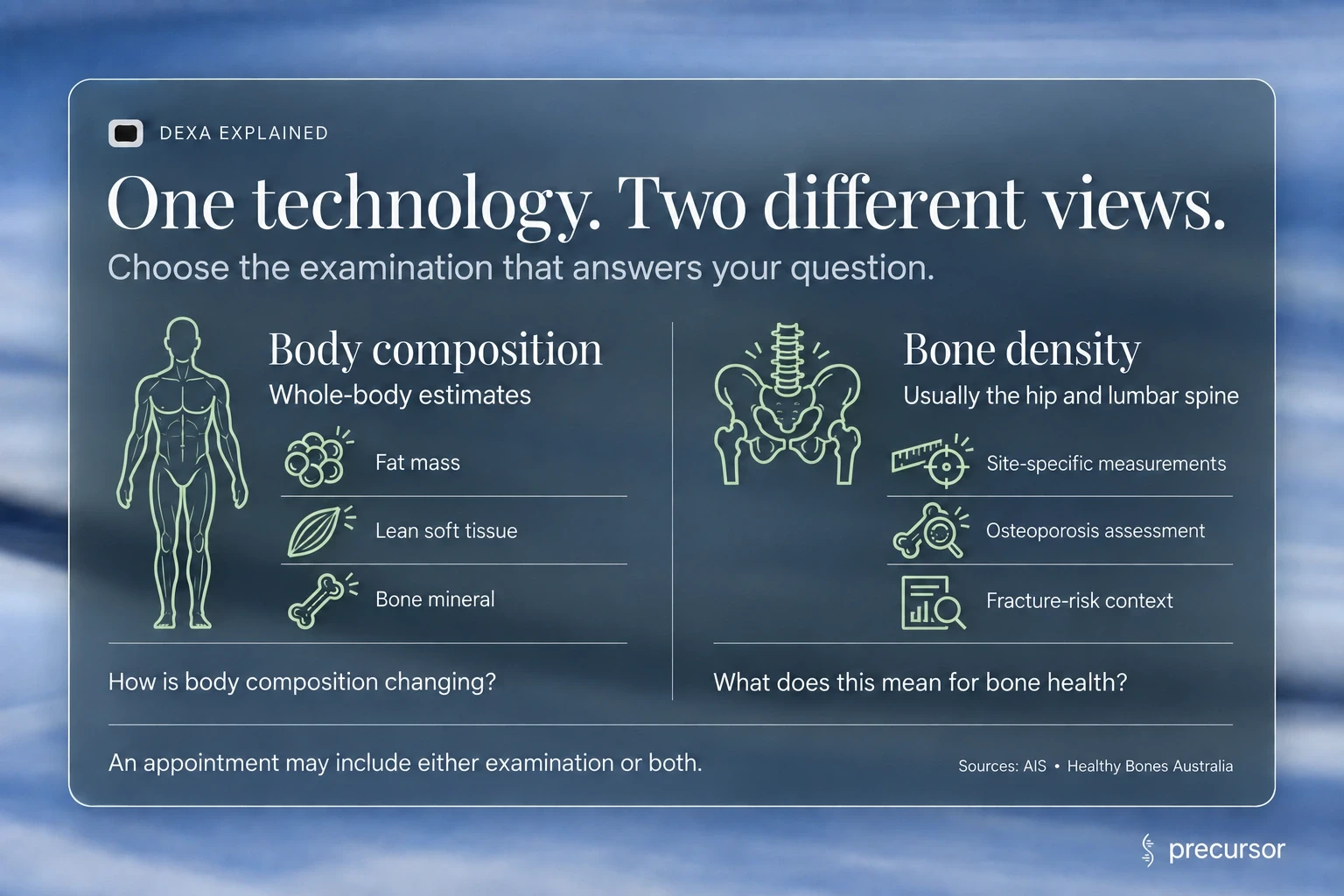
The clearest choice starts with the outcome you want: a repeatable view of body-composition change, a clinical assessment of bone health, or both.
What to know
Body-composition DEXA estimates fat, lean soft tissue and bone mineral across the body. (1)
Diagnostic bone-density DEXA usually measures the hip and spine to assess osteoporosis and fracture risk. (2, 3)
One appointment may include body composition, bone density or both examinations.
The most useful repeat comparison uses a consistent scanner, preparation routine and protocol. (1, 5)
Body composition makes change easier to see
Ordinary scales combine fat, muscle, bone and water into a single number. DEXA separates the measured body into fat, lean soft tissue and bone mineral, often with regional results for the arms, legs and trunk. Some systems also estimate visceral fat within an abdominal region. (1, 5)
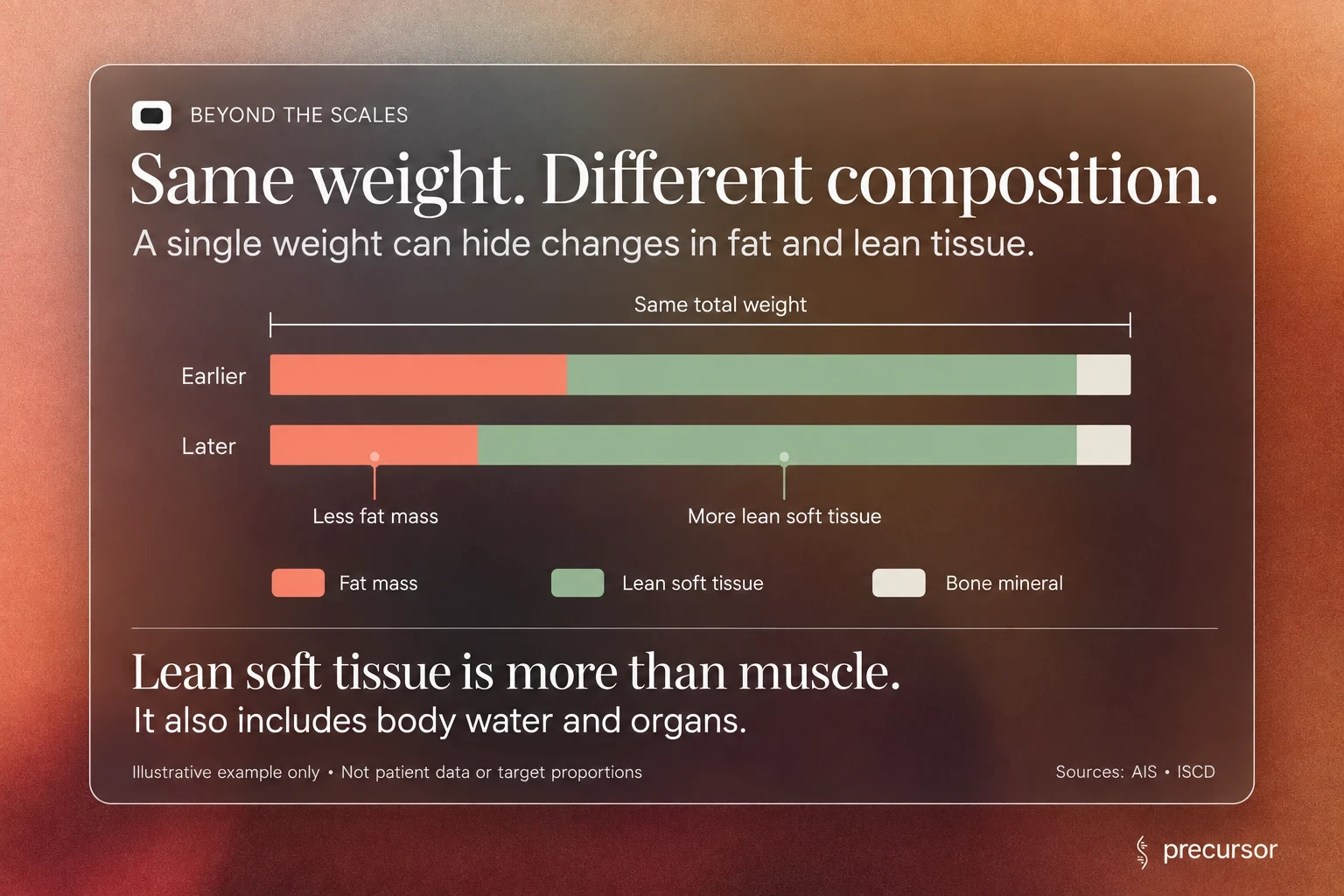
That detail can reveal changes that weight alone misses. A stable weight may sit beside a reduction in fat mass, an increase in lean tissue or a different regional pattern. When testing conditions are consistent, repeat scans can create a useful record of how the body is responding to training, nutrition or recovery.
The Australian Institute of Sport describes body-composition assessment as a way to inform health or performance goals and monitor change after an intervention. Its guidance also emphasises a clear purpose and consistent measurement. (1)
Lean soft tissue is not identical to muscle. It includes body water and organs as well as muscle. The result becomes more useful when it is considered alongside strength, function, fitness and relevant blood markers. Research comparing DXA with bioelectrical impedance also shows why estimates from different methods should not be treated as interchangeable. (7)
Bone density focuses on future fracture health
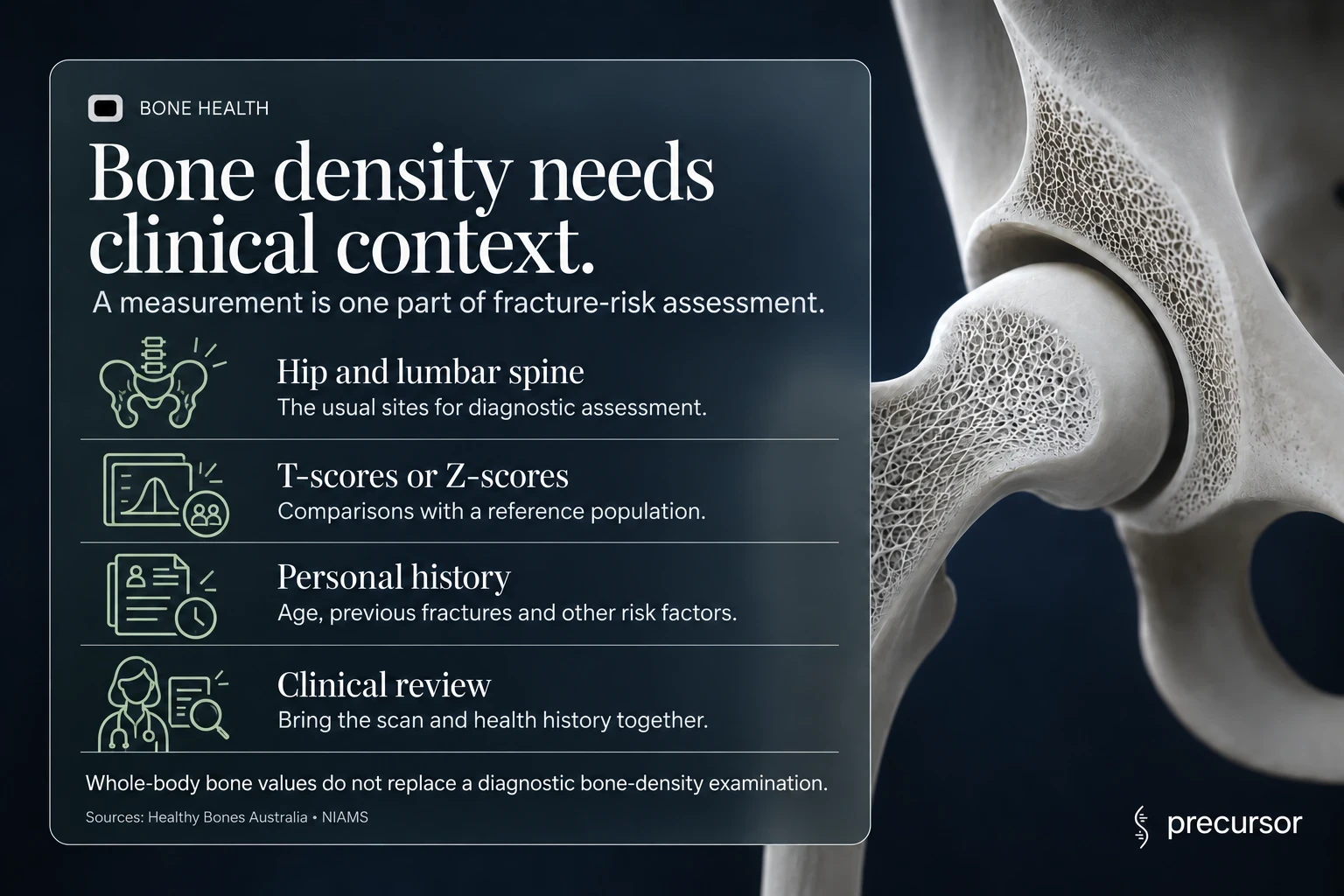
A clinical bone mineral density scan is usually centred on the hip and lumbar spine. These site-specific measurements help assess osteoporosis and future fracture risk. The report may include T-scores or Z-scores, which compare the measurement with an appropriate reference population. (2, 3, 6)
Bone-density testing can be especially valuable when there has been a fracture after a minor fall, a condition or medicine that affects bone, or another recognised risk factor. It can also monitor the effect of osteoporosis treatment. The result is interpreted alongside age, fracture history and other clinical information rather than as an isolated number. (2, 3)
A whole-body composition report may contain bone-related values, but that does not automatically make it a diagnostic hip-and-spine examination. The two views are complementary: one describes whole-body composition, while the other focuses on the skeletal sites used for clinical bone-health decisions.
When both views belong in one plan
Body composition and bone density often sit naturally beside each other in a long-term health conversation. Muscle, movement and bone loading are related, but each needs the right measurement.
Someone beginning a strength program may value a body-composition baseline and regional lean-tissue estimates. Someone with a low-trauma fracture may need formal bone-density assessment. A person concerned with both healthy ageing and skeletal health may find value in completing both examinations, provided the results are clearly identified and interpreted for their separate purposes.
This is the advantage of precise language. “DEXA scan” describes the technology; “body-composition DEXA” and “bone-density DEXA” describe what the appointment is meant to assess.
A quick and straightforward scan experience
DEXA is non-invasive, painless and usually brief. You lie on an open padded table while a scanning arm passes above you. There is no enclosed tunnel and no anaesthetic is required. The examination uses a very low dose of ionising radiation, and no radiation remains in the body afterwards. (6)
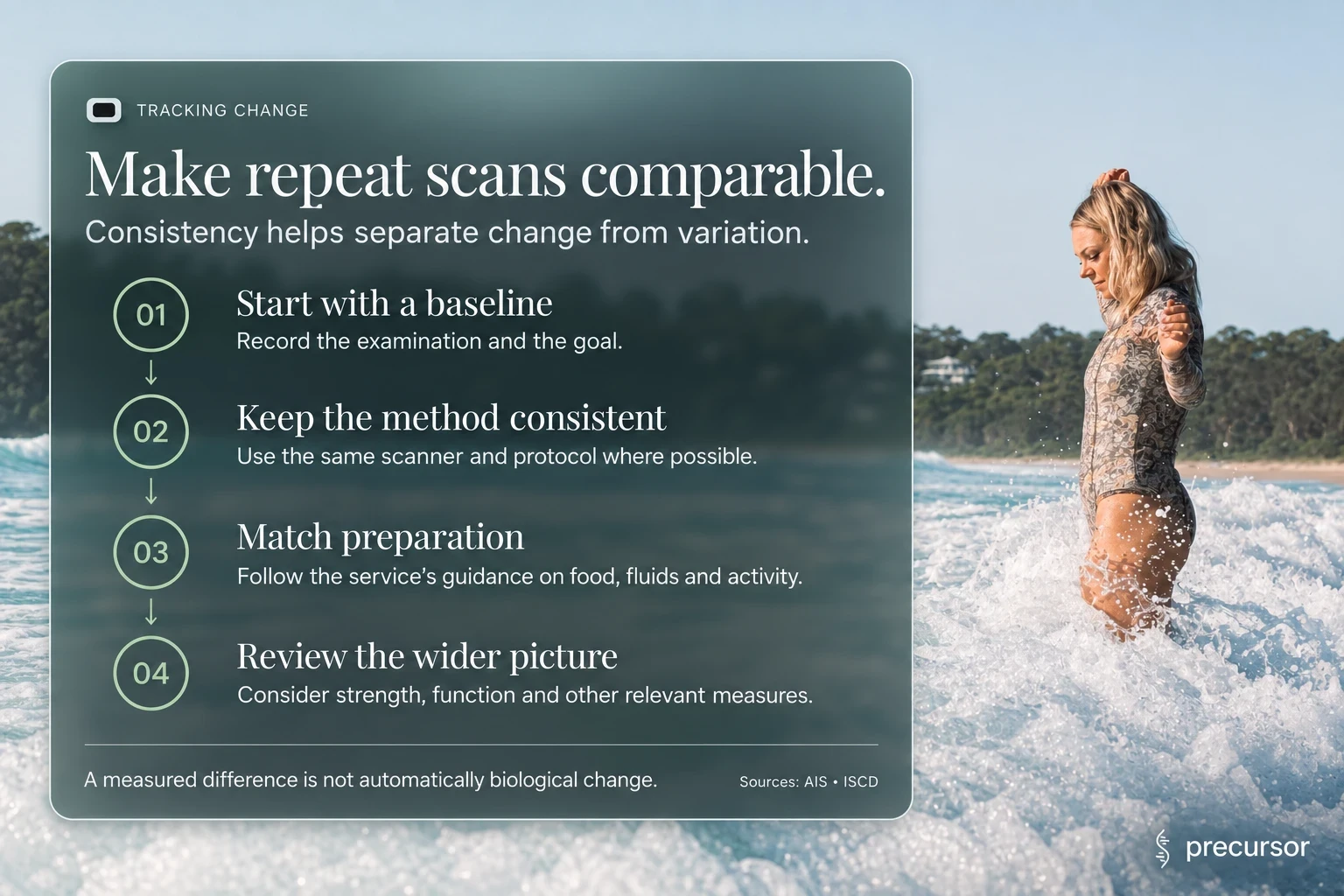
Positioning matters because repeat measurements are easier to compare when the same regions are assessed in the same way. Body-composition preparation may also cover meals, hydration and recent activity. Following a consistent routine makes small changes easier to interpret. (1, 5)
DEXA is generally not performed during pregnancy. Anyone who is or may be pregnant should tell the imaging service before the appointment. (5, 6)
Turning a baseline into a useful trend
One scan creates a baseline. Repeat scans can show direction, but a measured difference is not automatically a biological change. Food, fluids, exercise, positioning and equipment can all affect the comparison. (1, 5)
Using the same scanner and a similar preparation routine reduces avoidable variation. A meaningful interval also gives the health plan time to work. The result can then be reviewed beside changes in strength, waist measurement, fitness, symptoms or relevant blood markers.
This is where DEXA becomes more than a report. It creates a structured way to observe change over time, recognise progress that a scale may miss and direct attention to the area most relevant to the next phase of a plan.
Cost and Medicare in Australia
Prices vary because appointments can include different measurements, reports and consultation support. The applicable funding pathway depends on the exact examination and its clinical purpose.
Medicare rebates for bone densitometry apply only to defined clinical indications and item requirements. A referral or the word “DEXA” does not by itself establish eligibility. The applicable pathway depends on the examination being performed and the clinical circumstances. (4)
A positive next step with Precursor
Precursor uses diagnostics to make health information clearer and change easier to follow. Body-composition DEXA can create a detailed starting point, while clinical bone-density testing can add a focused view of skeletal health when indicated.
Explore Precursor's DEXA service to review the current pathway. Choosing the examination that matches your goal gives the result a more useful place in your longer-term health plan.
This article provides general information and does not replace individual medical advice.
Frequently asked questions
What is the difference between body-composition DEXA and bone-density DEXA?
Body-composition DEXA estimates fat, lean soft tissue and bone mineral across the body. Diagnostic bone-density DEXA generally measures the hip and spine to assess osteoporosis and fracture risk. They use the same technology, but the scan regions, report and clinical purpose are different. (1, 2, 3)
What are the benefits of a DEXA body-composition scan?
A body-composition DEXA provides regional estimates that a scale cannot show. It can create a baseline for fat and lean tissue, make gradual change easier to see and support a more focused conversation about nutrition, movement, strength and long-term health. (1, 5)
Can body-composition DEXA diagnose osteoporosis?
Not by itself. A whole-body composition report may include bone-related values, but osteoporosis assessment generally uses site-specific measurements at the hip and spine together with clinical information. A diagnostic bone-density examination is the appropriate DEXA pathway when bone strength and fracture risk are the question. (2, 3, 6)
Can body composition and bone density be measured together?
Yes. Some appointments can include both a whole-body composition scan and site-specific bone-density measurements. Each result should remain clearly labelled because it answers a different question. Combining them can be useful when long-term body-composition goals and clinical bone health are both relevant. (1, 3, 5)
Is a DEXA scan comfortable?
DEXA is non-invasive, painless and usually quick. You lie on an open padded table while the scanning arm moves above you. There is no enclosed tunnel and no anaesthetic. Consistent positioning helps produce a result that can be compared more usefully with a future scan. (1, 6)
Is a DEXA scan covered by Medicare in Australia?
Medicare rebates for bone densitometry apply to defined clinical indications and item requirements. The cited Medicare item does not establish a rebate for elective consumer body-composition testing. Eligibility depends on the exact examination and clinical circumstances, so the applicable fee and rebate pathway can differ. (4)
Sources
Australian Institute of Sport
Practitioner resources for DXA assessment of body composition: GE LunarHealthy Bones Australia
Diagnosis: DEXA and bone-density scansNational Institute of Arthritis and Musculoskeletal and Skin Diseases (NIAMS)
Bone mineral density tests: what the numbers meanAustralian Government, Medicare Benefits Schedule
Item 12306: bone densitometryInternational Society for Clinical Densitometry (ISCD)
Official adult positions, 2023InsideRadiology, Royal Australian and New Zealand College of Radiologists
Bone mineral density scanBuckinx and colleagues
Concordance between muscle mass assessed by BIA and DXA, BMC Musculoskeletal Disorders, 2015